Summer Safety Tips for East Valley Families: Heat, Water, and Outdoor Activities in Tempe, Chandler, and Ahwatukee

Tempe · Community Photo
Summer in Tempe, Chandler, and Ahwatukee brings extraordinary heat alongside extraordinary outdoor opportunity — and navigating both safely requires more intention than families in milder climates typically need. With temperatures regularly exceeding 100 degrees and pools, splash pads, and water features central to East Valley summer life, understanding the specific risks of heat and water in this environment is essential knowledge for every household.
Heat Safety: Recognizing the Warning Signs
The CDC distinguishes between heat exhaustion and heat stroke, and knowing the difference matters because the appropriate response differs significantly between the two. Heat exhaustion presents as heavy sweating, cool or pale and clammy skin, a fast and weak pulse, nausea, dizziness, headache, and muscle cramps — symptoms that call for moving to a cool location, loosening clothing, and sipping water. Heat stroke is a medical emergency: body temperature can rise to 106 degrees or higher within 10 to 15 minutes once the body's cooling mechanism fails, and the CDC recommends calling 911 immediately, moving the person to a cooler location, and reducing body temperature with cold cloths or a bath while withholding fluids until trained help arrives. In the East Valley's climate, scheduling outdoor activities for early morning or evening hours rather than midday, and treating any child or adult who seems unusually fatigued or confused with serious caution, are the most reliable prevention strategies available.
Water Safety: Pool Guidelines for Arizona Families
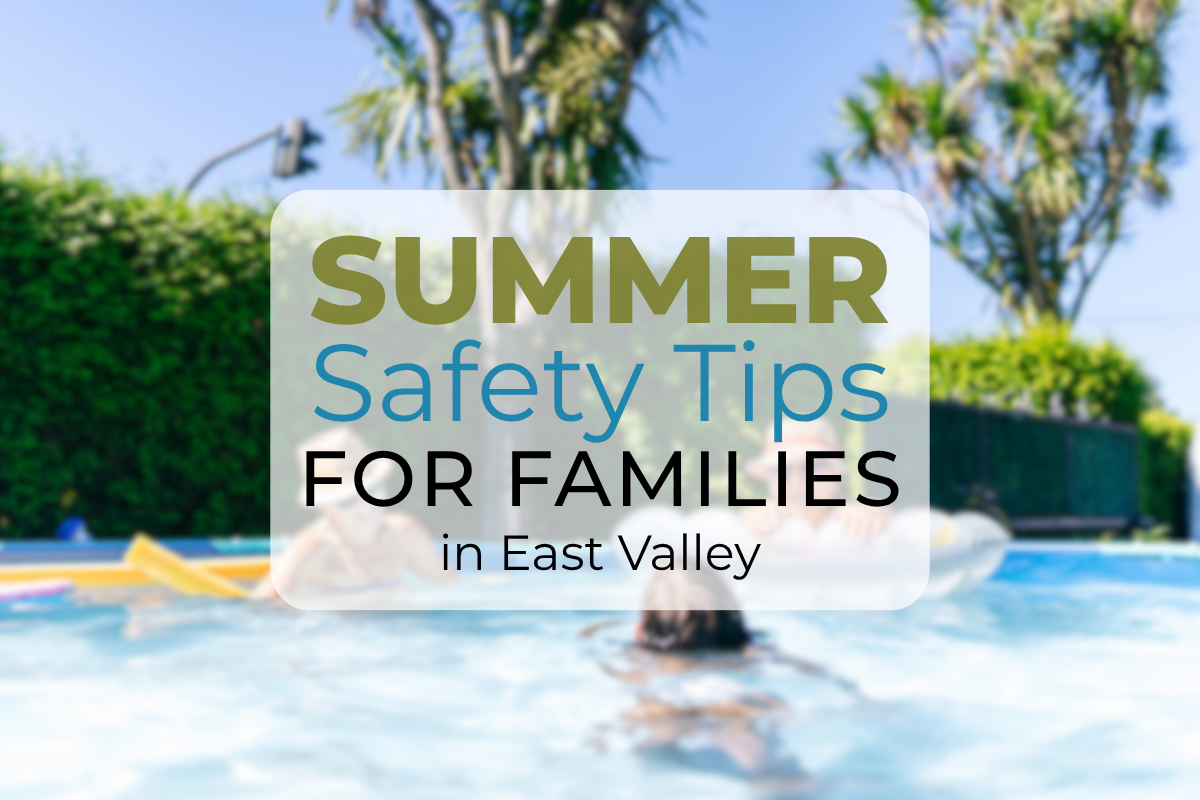
With backyard and community pools central to East Valley summer life, water safety deserves the same seriousness as heat safety. The CDC and American Academy of Pediatrics recommend a four-sided fence at least four feet high fully enclosing any residential pool, with a self-closing and self-latching gate that separates the pool from the house — a measure that addresses the most common drowning scenario, in which young children gain unsupervised access during non-swim times. A designated "water watcher" — an adult whose sole responsibility is supervising children in or near water, without the distraction of a phone or conversation — should remain within arm's reach of young children at all times. Floaties and inflatable toys are not safety devices; the CDC specifically recommends U.S. Coast Guard-approved life jackets for children and weaker swimmers in any open water setting like Tempe Town Lake or Saguaro Lake.
Sun Protection: Hydration and Clothing That Actually Work
Arizona's intensity of sun exposure makes sun protection inseparable from heat safety. The CDC recommends broad-spectrum sunscreen of SPF 15 or higher applied 30 minutes before going outside, with reapplication according to package directions — roughly every two hours, or immediately after swimming. Loose, lightweight, light-colored clothing helps the body regulate temperature more effectively than dark or tight-fitting fabrics, and the American Camp Association's hydration guidance recommends drinking two to four glasses (16 to 32 ounces) of cool water every hour during outdoor activity in hot weather, well before thirst sets in. Sunburned skin loses some of its ability to regulate temperature, which means a sunburn earlier in the week can make a child more vulnerable to heat-related illness on a subsequent hot day.
Neighborhood Preparedness in the East Valley
East Valley communities have built infrastructure specifically around the realities of desert summers — splash pads, climate-controlled recreation centers like Tempe's Kiwanis Wave Pool, and shaded park structures that give families safe options even on the hottest days. Checking on elderly neighbors during extreme heat events, sharing information about community cooling centers during heat advisories, and looking out for children playing outdoors in shared neighborhood spaces all reflect the kind of informal preparedness that strong East Valley communities build into their summer culture. Never leaving children or pets in parked vehicles — even briefly, even with windows cracked — remains one of the most important messages any neighborhood can reinforce, since vehicle interior temperatures can rise nearly 20 degrees within the first ten minutes.
FAQs
How do I keep my family safe in summer heat in the East Valley?
Schedule outdoor activities for early morning or evening, dress in loose and light-colored clothing, apply SPF 15 or higher sunscreen, and drink water consistently throughout the day rather than waiting until you're thirsty. Know the warning signs of heat exhaustion and heat stroke, and treat any signs of confusion or rapidly rising body temperature as a medical emergency requiring immediate 911 response.
What are basic water safety tips for East Valley pools?
Install four-sided pool fencing with a self-latching gate, designate an attentive "water watcher" whenever children are in or near water, and use Coast Guard-approved life jackets rather than floaties for children at lakes like Tempe Town Lake or Saguaro Lake. Never leave young children unsupervised near any water, even briefly.
Learn more about healthy summer living on East Valley Loop.
Looking for a family-focused community? Connect with Will Carter.
Sources: cdc.gov/extreme-heat, cdc.gov/drowning-prevention, healthychildren.org